


Scientific name:
Plant family:
Common name:
Lao name:
Radermachera sp.
Bignoniaceae
Dwarf Tree Jasmine
pip thong
We must admit that we don’t know much about this plant, but it is so beautiful that we wanted to show it to you. It belongs to the large Bignoniaceae family characterized by the deep throat of its very showy flowers, often nocturnal, pollinated by bats, moths and birds. Of the 83 genera of this tropical and subtropical family, a good twenty are edible, think of dok lin mai (Oroxylum indicum), dok kè luang (Markhamia stipulata), dok pip (Radermachera ignea). Precisely the tree that interests us is a species of Radermachera but which one, that is the question. Discovered very recently, it has not yet been named; some think it is R. pierrei, endemic to Thailand; others that it is a cultivar to which they apply the name Kunming where it would originate.
We saw it twice, in a garden in Thailand and another in Laos. In both cases the tree is no more than 4 meters tall and has very dense, shiny, dark green foliage; the leaves are pinnate, hanging in a “fountain effect”. Large clusters of flowers stand out against this leafy background; each is a large bell which opens onto 5 white petals, sometimes pink and a pale yellow throat streaked with dark yellow; they are very fragrant, giving off a scent of rose mixed with that of tangy fruits. Unlike those of the family, these flowers bloom during the day, which allows you to enjoy them throughout. The fruit is an elongated pod.
The genus Rademachera was named in 1854 in honor of the Dutch botanist Jacobus Cornelius Radermacher who lived in the 18th century. In Lao as in Thai, the few people who know this tree call it dok pip thong, “golden dok pip”, the name given to several species of this genus. We have not found a French name and the English name is also applied to other species of this genus, Dwarf Tree Jasmine.
This tree is still rare and yet it grows quickly and easily in all types of soil and withstands difficult climatic conditions. It also has the advantage of having very beautiful foliage while it is still very small, which makes it an appreciable potted plant.
In addition, we found this assessment on the site of a nurseryman: “the tree symbolizes simplicity, endurance, perseverance and tranquility. The extract of its flowers is used in the village pharmacy as a relaxant and aphrodisiac. »
Nous devons bien avouer que nous ne savons pas grand-chose à propos de cette plante, mais elle est si belle que nous avons voulu vous la montrer. Elle appartient à la grande famille des Bignoniacées caractérisée par la gorge profonde de ses fleurs très voyantes, souvent nocturnes, pollinisées par les chauves-souris, les paillons et les oiseaux. Sur les 83 genres de cette famille tropicale et subtropicale, une bonne vingtaine est comestible, pensons à dok lin mai (Oroxylum indicum), dok kè luang (Markhamia stipulata), dok pip (Radermachera ignea). Justement l’arbre qui nous intéresse est une espèce de Radermachera mais laquelle, là est la question. Découverte très récemment elle ne serait pas encore nommée, certains pensent qu’il s’agit de R. pierrei, endémique de Thaïlande; d’autres que c’est un cultivar auquel ils appliquent le nom Kunming d’où elle serait originaire.
Nous l’avons vu 2 fois, dans un jardin en Thaïlande et dans un autre au Laos. Dans les deux cas l’arbre n’a pas plus de 4 mètres et il porte un feuillage très dense, brillant, vert foncé; les feuilles sont pennées, pendante dans un « effet de fontaine ». De grosses grappes de fleurs se découpent sur ce fond feuillu; chacune est une grande cloche qui s’ouvre sur 5 pétales blancs, parfois rosés et une gorge jaune pâle striée de jaune foncé; elles sont très parfumées, dégageant une odeur de rose mêlée à celle de fruits acidulés. Contrairement à celles de la famille ces fleurs s’épanouissent le jour ce qui permet d’en jouir tout au long. Le fruit est une gousse allongée.
Le genre Rademachera a été nommé en 1854 en l’honneur du botaniste hollandais Jacobus Cornelius Radermacher qui vécut au XVIIIème siècle. En lao comme en thaï les quelques personnes qui connaissent cet arbre le nomment dok pip thong, « dok pip d’or », nom donné à plusieurs espèces de ce genre. Nous n’avons pas trouvé de nom français et le nom anglais est lui aussi appliqué à d’autres espèce de ce genre, dwarf tree jasmine.
Cet arbre est encore rare et pourtant il pousse vite et facilement dans tout type de sol et supporte des conditions climatiques difficiles. Il a aussi l’avantage d’avoir un très beau feuillage alors qu’il est encore de toute petite taille, ce qui en fait une plante en pot appréciable.
En outre, nous avons trouvé sur le site d’un pépiniériste cette appréciation : « l’arbre symbolise la simplicité, l’endurance, la persévérance et la tranquillité. L’extrait de ses fleurs est utilisé en pharmacie du village comme relaxant et aphrodisiaque. »
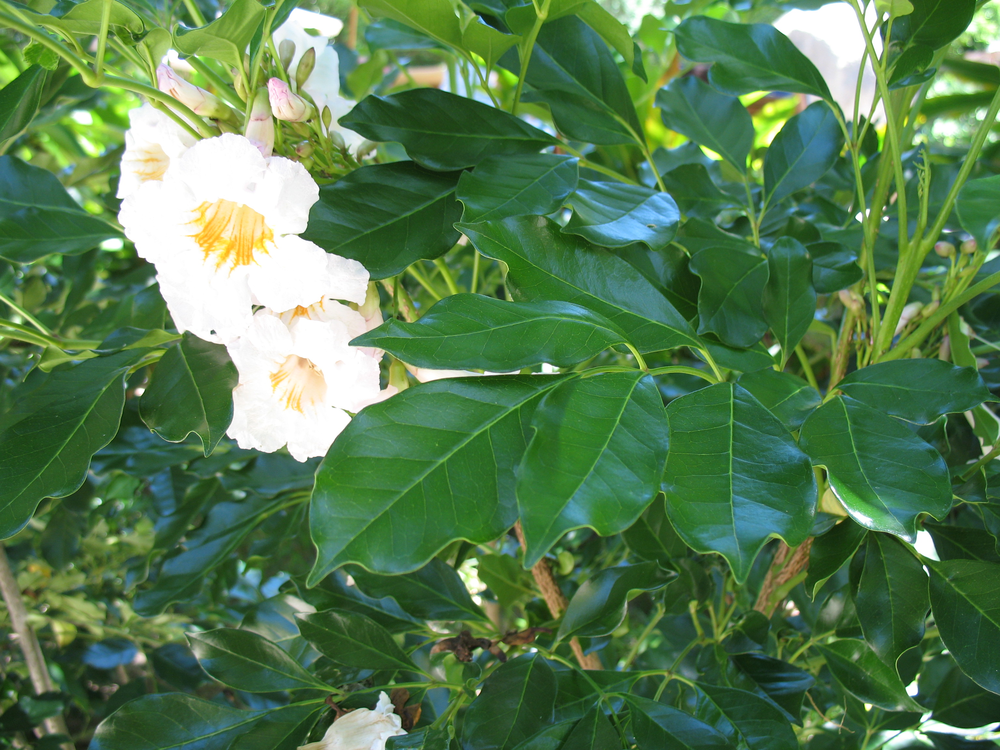
The foliage of dok pip thong is very decorative
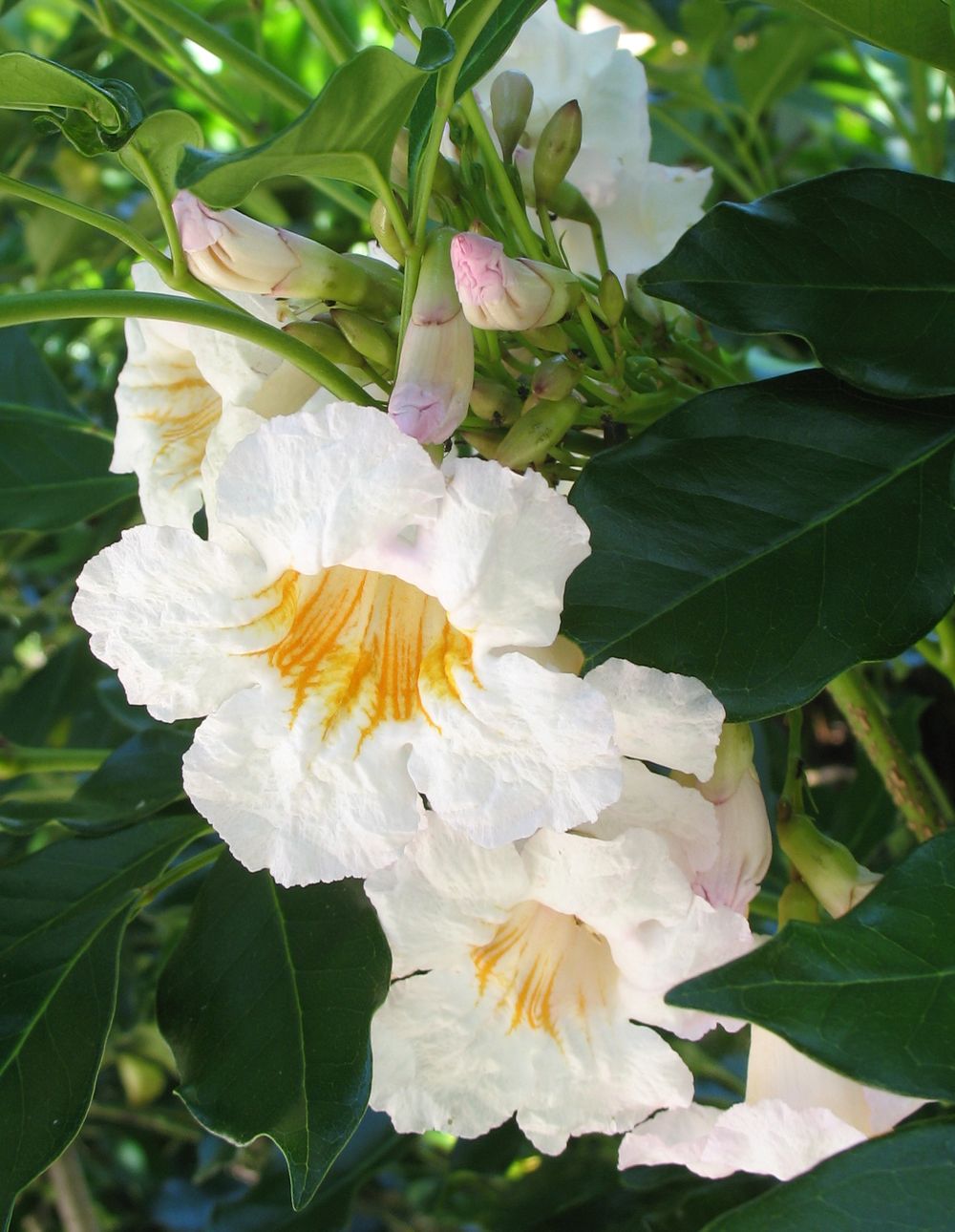
2 The flower buds are slightly pink
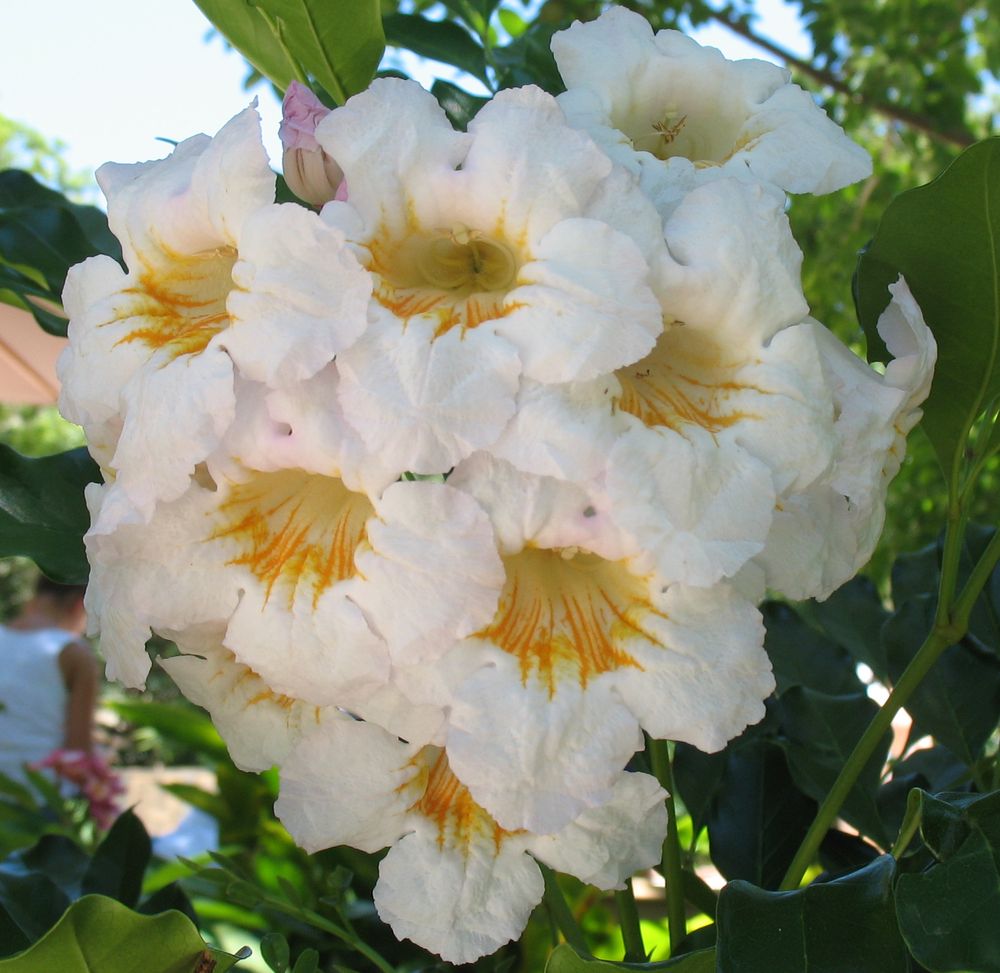
The flowers make up large fragrant bouquets.
Scientific name:
Radermachera sp.
Plant family:
Bignoniaceae
Common name:
Dwarf Tree Jasmine
Lao name:
pip thong
We must admit that we don’t know much about this plant, but it is so beautiful that we wanted to show it to you. It belongs to the large Bignoniaceae family characterized by the deep throat of its very showy flowers, often nocturnal, pollinated by bats, moths and birds. Of the 83 genera of this tropical and subtropical family, a good twenty are edible, think of dok lin mai (Oroxylum indicum), dok kè luang (Markhamia stipulata), dok pip (Radermachera ignea). Precisely the tree that interests us is a species of Radermachera but which one, that is the question. Discovered very recently, it has not yet been named; some think it is R. pierrei, endemic to Thailand; others that it is a cultivar to which they apply the name Kunming where it would originate.
We saw it twice, in a garden in Thailand and another in Laos. In both cases the tree is no more than 4 meters tall and has very dense, shiny, dark green foliage; the leaves are pinnate, hanging in a “fountain effect”. Large clusters of flowers stand out against this leafy background; each is a large bell which opens onto 5 white petals, sometimes pink and a pale yellow throat streaked with dark yellow; they are very fragrant, giving off a scent of rose mixed with that of tangy fruits. Unlike those of the family, these flowers bloom during the day, which allows you to enjoy them throughout. The fruit is an elongated pod.
The genus Rademachera was named in 1854 in honor of the Dutch botanist Jacobus Cornelius Radermacher who lived in the 18th century. In Lao as in Thai, the few people who know this tree call it dok pip thong, “golden dok pip”, the name given to several species of this genus. We have not found a French name and the English name is also applied to other species of this genus, Dwarf Tree Jasmine.
This tree is still rare and yet it grows quickly and easily in all types of soil and withstands difficult climatic conditions. It also has the advantage of having very beautiful foliage while it is still very small, which makes it an appreciable potted plant.
In addition, we found this assessment on the site of a nurseryman: “the tree symbolizes simplicity, endurance, perseverance and tranquility. The extract of its flowers is used in the village pharmacy as a relaxant and aphrodisiac. »
Nous devons bien avouer que nous ne savons pas grand-chose à propos de cette plante, mais elle est si belle que nous avons voulu vous la montrer. Elle appartient à la grande famille des Bignoniacées caractérisée par la gorge profonde de ses fleurs très voyantes, souvent nocturnes, pollinisées par les chauves-souris, les paillons et les oiseaux. Sur les 83 genres de cette famille tropicale et subtropicale, une bonne vingtaine est comestible, pensons à dok lin mai (Oroxylum indicum), dok kè luang (Markhamia stipulata), dok pip (Radermachera ignea). Justement l’arbre qui nous intéresse est une espèce de Radermachera mais laquelle, là est la question. Découverte très récemment elle ne serait pas encore nommée, certains pensent qu’il s’agit de R. pierrei, endémique de Thaïlande; d’autres que c’est un cultivar auquel ils appliquent le nom Kunming d’où elle serait originaire.
Nous l’avons vu 2 fois, dans un jardin en Thaïlande et dans un autre au Laos. Dans les deux cas l’arbre n’a pas plus de 4 mètres et il porte un feuillage très dense, brillant, vert foncé; les feuilles sont pennées, pendante dans un « effet de fontaine ». De grosses grappes de fleurs se découpent sur ce fond feuillu; chacune est une grande cloche qui s’ouvre sur 5 pétales blancs, parfois rosés et une gorge jaune pâle striée de jaune foncé; elles sont très parfumées, dégageant une odeur de rose mêlée à celle de fruits acidulés. Contrairement à celles de la famille ces fleurs s’épanouissent le jour ce qui permet d’en jouir tout au long. Le fruit est une gousse allongée.
Le genre Rademachera a été nommé en 1854 en l’honneur du botaniste hollandais Jacobus Cornelius Radermacher qui vécut au XVIIIème siècle. En lao comme en thaï les quelques personnes qui connaissent cet arbre le nomment dok pip thong, « dok pip d’or », nom donné à plusieurs espèces de ce genre. Nous n’avons pas trouvé de nom français et le nom anglais est lui aussi appliqué à d’autres espèce de ce genre, dwarf tree jasmine.
Cet arbre est encore rare et pourtant il pousse vite et facilement dans tout type de sol et supporte des conditions climatiques difficiles. Il a aussi l’avantage d’avoir un très beau feuillage alors qu’il est encore de toute petite taille, ce qui en fait une plante en pot appréciable.
En outre, nous avons trouvé sur le site d’un pépiniériste cette appréciation : « l’arbre symbolise la simplicité, l’endurance, la persévérance et la tranquillité. L’extrait de ses fleurs est utilisé en pharmacie du village comme relaxant et aphrodisiaque. »
The foliage of dok pip thong is very decorative
2 The flower buds are slightly pink
The flowers make up large fragrant bouquets.
The foliage of dok pip thong is very decorative
2 The flower buds are slightly pink
The flowers make up large fragrant bouquets.
Scientific name:
Radermachera sp.
Plant family:
Bignoniaceae
Common name:
Dwarf Tree Jasmine
Lao name:
pip thong
We must admit that we don’t know much about this plant, but it is so beautiful that we wanted to show it to you. It belongs to the large Bignoniaceae family characterized by the deep throat of its very showy flowers, often nocturnal, pollinated by bats, moths and birds. Of the 83 genera of this tropical and subtropical family, a good twenty are edible, think of dok lin mai (Oroxylum indicum), dok kè luang (Markhamia stipulata), dok pip (Radermachera ignea). Precisely the tree that interests us is a species of Radermachera but which one, that is the question. Discovered very recently, it has not yet been named; some think it is R. pierrei, endemic to Thailand; others that it is a cultivar to which they apply the name Kunming where it would originate.
We saw it twice, in a garden in Thailand and another in Laos. In both cases the tree is no more than 4 meters tall and has very dense, shiny, dark green foliage; the leaves are pinnate, hanging in a “fountain effect”. Large clusters of flowers stand out against this leafy background; each is a large bell which opens onto 5 white petals, sometimes pink and a pale yellow throat streaked with dark yellow; they are very fragrant, giving off a scent of rose mixed with that of tangy fruits. Unlike those of the family, these flowers bloom during the day, which allows you to enjoy them throughout. The fruit is an elongated pod.
The genus Rademachera was named in 1854 in honor of the Dutch botanist Jacobus Cornelius Radermacher who lived in the 18th century. In Lao as in Thai, the few people who know this tree call it dok pip thong, “golden dok pip”, the name given to several species of this genus. We have not found a French name and the English name is also applied to other species of this genus, Dwarf Tree Jasmine.
This tree is still rare and yet it grows quickly and easily in all types of soil and withstands difficult climatic conditions. It also has the advantage of having very beautiful foliage while it is still very small, which makes it an appreciable potted plant.
In addition, we found this assessment on the site of a nurseryman: “the tree symbolizes simplicity, endurance, perseverance and tranquility. The extract of its flowers is used in the village pharmacy as a relaxant and aphrodisiac. »
Nous devons bien avouer que nous ne savons pas grand-chose à propos de cette plante, mais elle est si belle que nous avons voulu vous la montrer. Elle appartient à la grande famille des Bignoniacées caractérisée par la gorge profonde de ses fleurs très voyantes, souvent nocturnes, pollinisées par les chauves-souris, les paillons et les oiseaux. Sur les 83 genres de cette famille tropicale et subtropicale, une bonne vingtaine est comestible, pensons à dok lin mai (Oroxylum indicum), dok kè luang (Markhamia stipulata), dok pip (Radermachera ignea). Justement l’arbre qui nous intéresse est une espèce de Radermachera mais laquelle, là est la question. Découverte très récemment elle ne serait pas encore nommée, certains pensent qu’il s’agit de R. pierrei, endémique de Thaïlande; d’autres que c’est un cultivar auquel ils appliquent le nom Kunming d’où elle serait originaire.
Nous l’avons vu 2 fois, dans un jardin en Thaïlande et dans un autre au Laos. Dans les deux cas l’arbre n’a pas plus de 4 mètres et il porte un feuillage très dense, brillant, vert foncé; les feuilles sont pennées, pendante dans un « effet de fontaine ». De grosses grappes de fleurs se découpent sur ce fond feuillu; chacune est une grande cloche qui s’ouvre sur 5 pétales blancs, parfois rosés et une gorge jaune pâle striée de jaune foncé; elles sont très parfumées, dégageant une odeur de rose mêlée à celle de fruits acidulés. Contrairement à celles de la famille ces fleurs s’épanouissent le jour ce qui permet d’en jouir tout au long. Le fruit est une gousse allongée.
Le genre Rademachera a été nommé en 1854 en l’honneur du botaniste hollandais Jacobus Cornelius Radermacher qui vécut au XVIIIème siècle. En lao comme en thaï les quelques personnes qui connaissent cet arbre le nomment dok pip thong, « dok pip d’or », nom donné à plusieurs espèces de ce genre. Nous n’avons pas trouvé de nom français et le nom anglais est lui aussi appliqué à d’autres espèce de ce genre, dwarf tree jasmine.
Cet arbre est encore rare et pourtant il pousse vite et facilement dans tout type de sol et supporte des conditions climatiques difficiles. Il a aussi l’avantage d’avoir un très beau feuillage alors qu’il est encore de toute petite taille, ce qui en fait une plante en pot appréciable.
En outre, nous avons trouvé sur le site d’un pépiniériste cette appréciation : « l’arbre symbolise la simplicité, l’endurance, la persévérance et la tranquillité. L’extrait de ses fleurs est utilisé en pharmacie du village comme relaxant et aphrodisiaque. »