


Scientific name:
Plant family:
Common name:
Lao name:
Cryptolepis dubia (Burm.f.) M.R.Almeida
(Burm.f.) M.R.Almeida
Black Creeper
éne one
Two lianas are named in Lao kheua éne one; they belong to different species, to different but quite close families, and are both considered good medicines: One belongs to the Apocynaceae family, Ichnocarpus frutescens, the other to that of Asclepiadaceae, Cryptolepis dubia
They are both found in the Indochinese peninsula but the distribution area of I. (from India to Australia) is larger than that of C. which goes from India to Vietnam via southern China. Both inhabit humid forests up to an average altitude of 1000 m. They have slender, sarmentose stems, 10 to 20 meters for I. while C. is shorter. Both exude a white sap that is more abundant in C. Their leaves are oblong, about ten centimeters long, but those of I. are sharp at the top while those of C. have a clearly marked point and a large number of fine veins. In both vines the flowers are small, white, yellowish or greenish, grouped in axillary or terminal inflorescences. In I. the fruits are long slender follicles while for C. they are much shorter.
One might have thought that in Thailand also these two plants have the same name; this is not the case: I. is called khreua polar song daeng, and C. thao én orn. In Lao kheua éne one means “vine whose stems are frail”.
The medicinal uses of Ichnocarpus are numerous; the decoction of the roots is given as a fortifying and tonic; the stems and leaves are said to help fight fevers, skin diseases, dysentery, asthma and cholera. In Cambodia, where the plant is called vor trey (“fish vine”), in addition to the same medicinal uses, it is highly sought after for making fishing nets (hence its name), dams on streams and fences.
The uses of Cryptolepis are less; in medicine it is mainly a plant dedicated to wounds and bruises; the leaves applied to the swollen part are said to relieve pain; I was even told that this leaf cut in two sticks back together by itself, hence its healing power?
Two lianas are named in Lao kheua éne one; they belong to different species, to different but quite close families, and are both considered good medicines: One belongs to the Apocynaceae family, Ichnocarpus frutescens, the other to that of Asclepiadaceae, Cryptolepis dubia
They are both found in the Indochinese peninsula but the distribution area of I. (from India to Australia) is larger than that of C. which goes from India to Vietnam via southern China. Both inhabit humid forests up to an average altitude of 1000 m. They have slender, sarmentose stems, 10 to 20 meters for I. while C. is shorter. Both exude a white sap that is more abundant in C. Their leaves are oblong, about ten centimeters long, but those of I. are sharp at the top while those of C. have a clearly marked point and a large number of fine veins. In both vines the flowers are small, white, yellowish or greenish, grouped in axillary or terminal inflorescences. In I. the fruits are long slender follicles while for C. they are much shorter.
One might have thought that in Thailand also these two plants have the same name; this is not the case: I. is called khreua polar song daeng, and C. thao én orn. In Lao kheua éne one means “vine whose stems are frail”.
The medicinal uses of Ichnocarpus are numerous; the decoction of the roots is given as a fortifying and tonic; the stems and leaves are said to help fight fevers, skin diseases, dysentery, asthma and cholera. In Cambodia, where the plant is called vor trey (“fish vine”), in addition to the same medicinal uses, it is highly sought after for making fishing nets (hence its name), dams on streams and fences.
The uses of Cryptolepis are less; in medicine it is mainly a plant dedicated to wounds and bruises; the leaves applied to the swollen part are said to relieve pain; I was even told that this leaf cut in two sticks back together by itself, hence its healing power?

Cryptolepis in its habitat in Laos

Leaf with a pointed tip and many veins of Cryptolepis

Small Cryptolepis flowers.
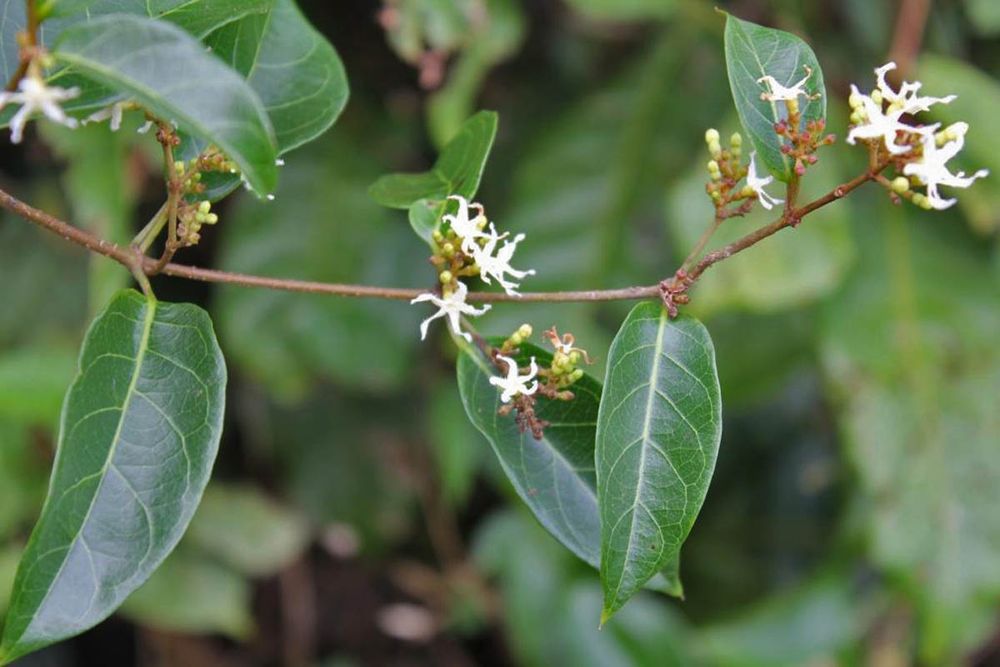
Ichnocarpus leaves and flowers
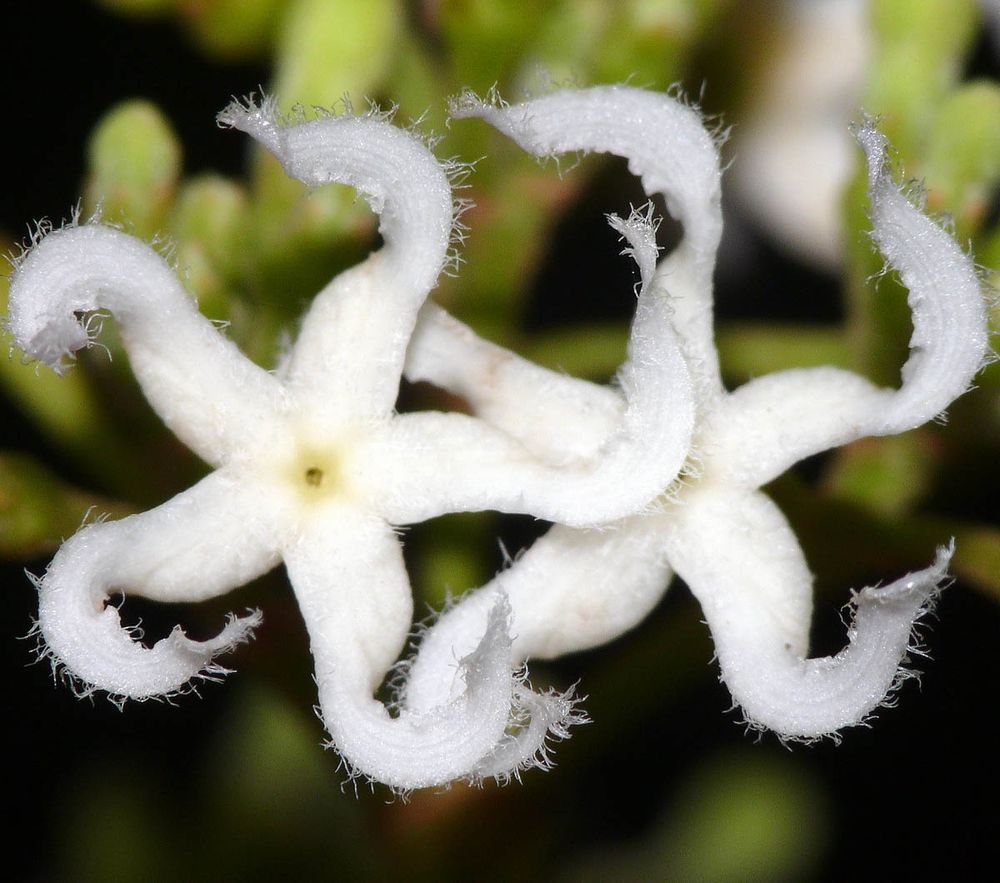
Small flower close-up of Ichnocarpus (internet).
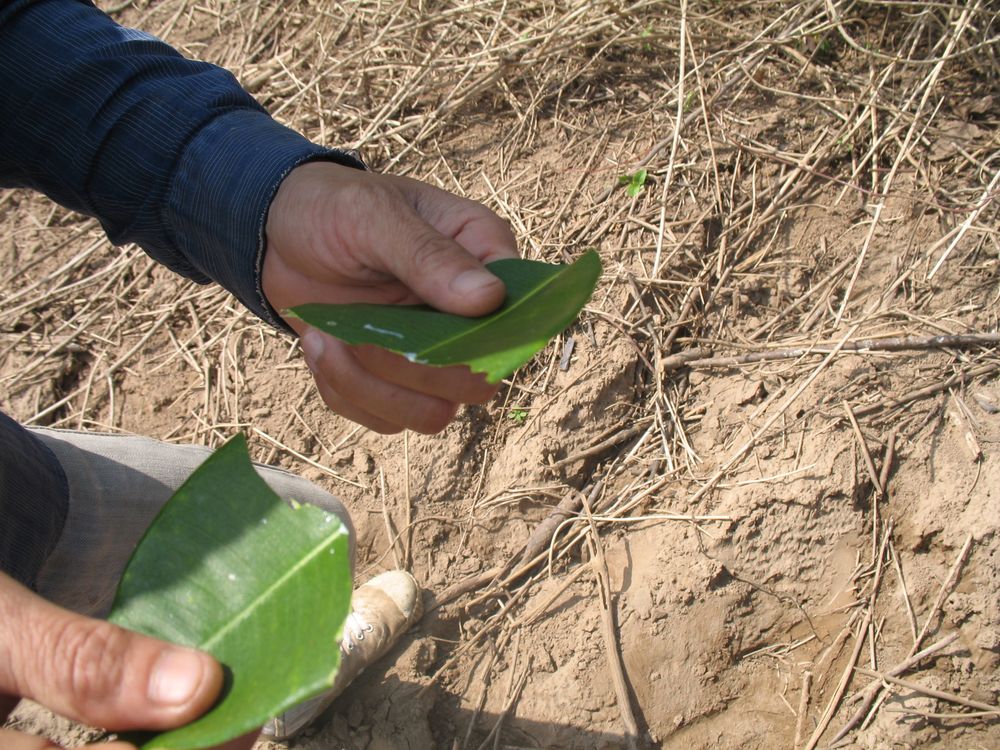
The leaves of 2 species secrete a white sap
Scientific name:
Cryptolepis dubia (Burm.f.) M.R.Almeida
Plant family:
(Burm.f.) M.R.Almeida
Common name:
Black Creeper
Lao name:
éne one
Two lianas are named in Lao kheua éne one; they belong to different species, to different but quite close families, and are both considered good medicines: One belongs to the Apocynaceae family, Ichnocarpus frutescens, the other to that of Asclepiadaceae, Cryptolepis dubia
They are both found in the Indochinese peninsula but the distribution area of I. (from India to Australia) is larger than that of C. which goes from India to Vietnam via southern China. Both inhabit humid forests up to an average altitude of 1000 m. They have slender, sarmentose stems, 10 to 20 meters for I. while C. is shorter. Both exude a white sap that is more abundant in C. Their leaves are oblong, about ten centimeters long, but those of I. are sharp at the top while those of C. have a clearly marked point and a large number of fine veins. In both vines the flowers are small, white, yellowish or greenish, grouped in axillary or terminal inflorescences. In I. the fruits are long slender follicles while for C. they are much shorter.
One might have thought that in Thailand also these two plants have the same name; this is not the case: I. is called khreua polar song daeng, and C. thao én orn. In Lao kheua éne one means “vine whose stems are frail”.
The medicinal uses of Ichnocarpus are numerous; the decoction of the roots is given as a fortifying and tonic; the stems and leaves are said to help fight fevers, skin diseases, dysentery, asthma and cholera. In Cambodia, where the plant is called vor trey (“fish vine”), in addition to the same medicinal uses, it is highly sought after for making fishing nets (hence its name), dams on streams and fences.
The uses of Cryptolepis are less; in medicine it is mainly a plant dedicated to wounds and bruises; the leaves applied to the swollen part are said to relieve pain; I was even told that this leaf cut in two sticks back together by itself, hence its healing power?
Two lianas are named in Lao kheua éne one; they belong to different species, to different but quite close families, and are both considered good medicines: One belongs to the Apocynaceae family, Ichnocarpus frutescens, the other to that of Asclepiadaceae, Cryptolepis dubia
They are both found in the Indochinese peninsula but the distribution area of I. (from India to Australia) is larger than that of C. which goes from India to Vietnam via southern China. Both inhabit humid forests up to an average altitude of 1000 m. They have slender, sarmentose stems, 10 to 20 meters for I. while C. is shorter. Both exude a white sap that is more abundant in C. Their leaves are oblong, about ten centimeters long, but those of I. are sharp at the top while those of C. have a clearly marked point and a large number of fine veins. In both vines the flowers are small, white, yellowish or greenish, grouped in axillary or terminal inflorescences. In I. the fruits are long slender follicles while for C. they are much shorter.
One might have thought that in Thailand also these two plants have the same name; this is not the case: I. is called khreua polar song daeng, and C. thao én orn. In Lao kheua éne one means “vine whose stems are frail”.
The medicinal uses of Ichnocarpus are numerous; the decoction of the roots is given as a fortifying and tonic; the stems and leaves are said to help fight fevers, skin diseases, dysentery, asthma and cholera. In Cambodia, where the plant is called vor trey (“fish vine”), in addition to the same medicinal uses, it is highly sought after for making fishing nets (hence its name), dams on streams and fences.
The uses of Cryptolepis are less; in medicine it is mainly a plant dedicated to wounds and bruises; the leaves applied to the swollen part are said to relieve pain; I was even told that this leaf cut in two sticks back together by itself, hence its healing power?
Cryptolepis in its habitat in Laos
Leaf with a pointed tip and many veins of Cryptolepis
Small Cryptolepis flowers.
Ichnocarpus leaves and flowers
Small flower close-up of Ichnocarpus (internet).
The leaves of 2 species secrete a white sap
Cryptolepis in its habitat in Laos
Leaf with a pointed tip and many veins of Cryptolepis
Small Cryptolepis flowers.
Ichnocarpus leaves and flowers
Small flower close-up of Ichnocarpus (internet).
The leaves of 2 species secrete a white sap
Scientific name:
Cryptolepis dubia (Burm.f.) M.R.Almeida
Plant family:
(Burm.f.) M.R.Almeida
Common name:
Black Creeper
Lao name:
éne one
Two lianas are named in Lao kheua éne one; they belong to different species, to different but quite close families, and are both considered good medicines: One belongs to the Apocynaceae family, Ichnocarpus frutescens, the other to that of Asclepiadaceae, Cryptolepis dubia
They are both found in the Indochinese peninsula but the distribution area of I. (from India to Australia) is larger than that of C. which goes from India to Vietnam via southern China. Both inhabit humid forests up to an average altitude of 1000 m. They have slender, sarmentose stems, 10 to 20 meters for I. while C. is shorter. Both exude a white sap that is more abundant in C. Their leaves are oblong, about ten centimeters long, but those of I. are sharp at the top while those of C. have a clearly marked point and a large number of fine veins. In both vines the flowers are small, white, yellowish or greenish, grouped in axillary or terminal inflorescences. In I. the fruits are long slender follicles while for C. they are much shorter.
One might have thought that in Thailand also these two plants have the same name; this is not the case: I. is called khreua polar song daeng, and C. thao én orn. In Lao kheua éne one means “vine whose stems are frail”.
The medicinal uses of Ichnocarpus are numerous; the decoction of the roots is given as a fortifying and tonic; the stems and leaves are said to help fight fevers, skin diseases, dysentery, asthma and cholera. In Cambodia, where the plant is called vor trey (“fish vine”), in addition to the same medicinal uses, it is highly sought after for making fishing nets (hence its name), dams on streams and fences.
The uses of Cryptolepis are less; in medicine it is mainly a plant dedicated to wounds and bruises; the leaves applied to the swollen part are said to relieve pain; I was even told that this leaf cut in two sticks back together by itself, hence its healing power?
Two lianas are named in Lao kheua éne one; they belong to different species, to different but quite close families, and are both considered good medicines: One belongs to the Apocynaceae family, Ichnocarpus frutescens, the other to that of Asclepiadaceae, Cryptolepis dubia
They are both found in the Indochinese peninsula but the distribution area of I. (from India to Australia) is larger than that of C. which goes from India to Vietnam via southern China. Both inhabit humid forests up to an average altitude of 1000 m. They have slender, sarmentose stems, 10 to 20 meters for I. while C. is shorter. Both exude a white sap that is more abundant in C. Their leaves are oblong, about ten centimeters long, but those of I. are sharp at the top while those of C. have a clearly marked point and a large number of fine veins. In both vines the flowers are small, white, yellowish or greenish, grouped in axillary or terminal inflorescences. In I. the fruits are long slender follicles while for C. they are much shorter.
One might have thought that in Thailand also these two plants have the same name; this is not the case: I. is called khreua polar song daeng, and C. thao én orn. In Lao kheua éne one means “vine whose stems are frail”.
The medicinal uses of Ichnocarpus are numerous; the decoction of the roots is given as a fortifying and tonic; the stems and leaves are said to help fight fevers, skin diseases, dysentery, asthma and cholera. In Cambodia, where the plant is called vor trey (“fish vine”), in addition to the same medicinal uses, it is highly sought after for making fishing nets (hence its name), dams on streams and fences.
The uses of Cryptolepis are less; in medicine it is mainly a plant dedicated to wounds and bruises; the leaves applied to the swollen part are said to relieve pain; I was even told that this leaf cut in two sticks back together by itself, hence its healing power?