


Scientific name:
Plant family:
Common name:
Lao name:
Schleichera oleosa (Lour.) Merr.
Sapindaceae
Ceylon Oak
(tone kho som)
I thought I had covered all the small fruits regularly consumed in Laos, but new ones keep emerging, such as mak kho som, several of which shade the Vat Saphangmô in Vientiane.
This tall tree, which can reach up to forty meters, is found in semi-evergreen forests from Sri Lanka and India to the Indochinese peninsula. During the dry season, it sheds its compound leaves consisting of two or four pairs of oblong leaflets, which, when they emerge, are a beautiful dark red, forming a colourful mass that aids in identification. The tiny, pale yellow flowers form fragrant clusters on the bare branches. The nearly round fruit is a small berry, 1 to 2 cm in size, containing one or two hard seeds wrapped in a yellow and sour pulp.
Schleichera oleosa belongs to the Sapindaceae family, known for excellent fruits such as lychees, rambutans, and longans. Its scientific name is a reference to the Swiss botanist J. C. Schleicher. Its English and French names refer to locations: Sri Lanka (formerly Ceylon) for the English name and Cambodia for the French name, with Pongro being the name of a commune in the latter country. In Lao, many fruits are called “kho,” including the highly appreciated blue fruit of a Livistonia palm; however, this one is called “som” meaning “sour” and is botanically unrelated.
At Vat Saphangmô, I was told that the small yellow fruits are very good and even sold in markets. In the southern part of the country, they are considered very sour, and for this reason, they are pickled. They can also be cooked or added to a sour salad (tam som). The acidity is sometimes criticized as it may cause stomach pains, but paradoxically, these same pains are treated with crushed tree bark mixed with red ants; perhaps it’s the ants that are effective? The plant, containing a significant amount of tannins, is used for skin diseases, especially for healing ulcers. The bark, rich in tannins, is sometimes added to betel quid. Additionally, Tone mak kho som is an interesting lacquer carrier; its highly resistant wood is used to make mortars, and it produces excellent charcoal.
As its scientific name suggests, the seeds of Schleichera oleosa are oily; by pressing them, a slightly bitter oil is obtained, which thickens quickly but does not become rancid. In the past, this oil was used in Indochina for both food and lighting. It was also part of the famous hair oil, Macassar oil, highly sought after in Europe for beautiful hair. However, Petelot notes that this cosmetic was very greasy and stained the hats and chairs of high society. These observations illustrate once again how a plant can be rich in multiple uses.
Je croyais avoir fait le tour de tous les petits fruits consommés régulièrement au Laos, mais il s’en découvre toujours de nouveaux comme mak kho som dont plusieurs pieds ombragent le vat Saphangmô à Vientiane.
Ce grand arbre qui peut atteindre quarante mètres se rencontre dans les forêts semi-sempervirentes du Sri-Lanka, de l’Inde, jusque dans la péninsule indochinoise. Il perd en saison sèche ses feuilles composées de deux ou quatre paires de folioles oblongues qui, quand elles naissent, sont d’un beau rouge foncé formant une masse colorée qui permet de l’identifier. Les fleurs minuscules, jaunes pâles, constituent des grappes odorantes sur les branches dénudées. Le fruit à peu près rond est une petite baie de 1 à 2cm contenant une ou deux graines dures enveloppées dans une pulpe jaune et acide.
Schleichera oleosa appartient à la famille des Sapindacées dont nous connaissons de très bons fruits come les Litchi, les Ramboutans et les Longan; son nom scientifique lui a été donné en référence à un botaniste suisse, J. C. Schleicher; ses noms anglais et français font référence à des lieux: le Sri-Lanka (autrefois Ceylan) pour la langue anglaise et le Cambodge pour la française, Pongro étant le nom d’une commune de ce pays. En lao de nombreux fruits se nomment « kho » dont le fruit bleu très apprécié d’un palmier Livistonia, mais celui-là est dit « som », « acide », et n’a rien à voir, botaniquement parlant, avec celui-ci.
Au vat Saphangmô on me dit que les petits fruits jaunes sont très bons et même vendus sur les marchés; ailleurs dans le Sud du pays on considère qu’ils sont très acides et pour cette raison on les met en saumure; on peut également les faire cuire ou les ajouter à une salade acide (tam som). Cette acidité est parfois montrée du doigt car elle peut provoquer des douleurs d’estomac mais, paradoxalement, on soigne ces mêmes douleurs avec l’écorce de l’arbre écrasée avec des fourmis rouges; ce sont peut-être ces dernières qui sont alors efficaces ? La plante qui contient un taux significatif de tanins est employée dans les maladies de peau, en particulier pour la cicatrisation des ulcères. Pour ses tanins également l’écorce est parfois ajoutée à la chique de bétel. Tone mak kho som est, en outre, un porte-laque intéressant; son bois très résistant sert à faire des mortiers et il donne un excellent charbon de bois.
Comme son nom scientifique peut le faire penser, les graines de Schleichera oleosa sont oléagineuses; par pression elles donnent une huile légèrement amère qui s’épaissit rapidement mais sans rancir, autrefois employée en Indochine pour l’alimentation et l’éclairage. Elle entrait dans la composition d’une huile célèbre en son temps, l’huile de Macassar, très recherchée en Europe pour avoir une belle chevelure; Petelot souligne cependant que ce cosmétique était très gras et qu’il tachait les chapeaux et les fauteuils de la bonne société. Ces quelques remarques montrent bien, une fois encore, comment une plante peut être riche en utilisations multiples.
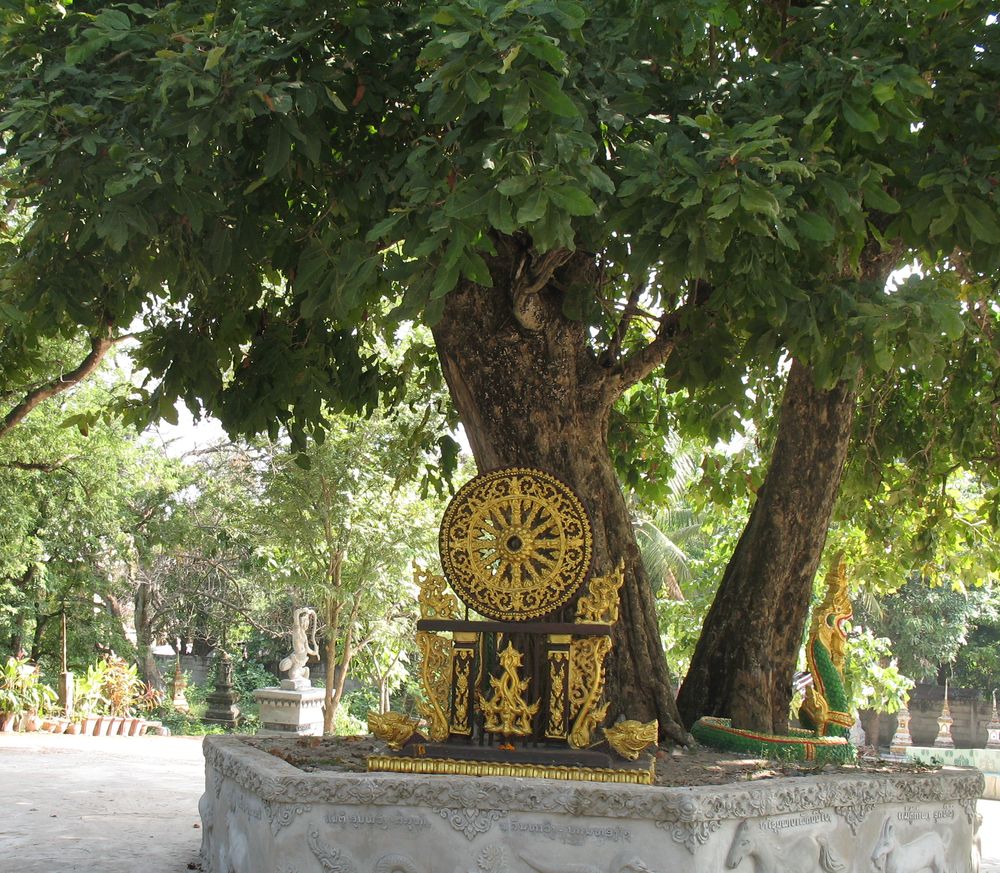
The tree in a pagoda in Laos
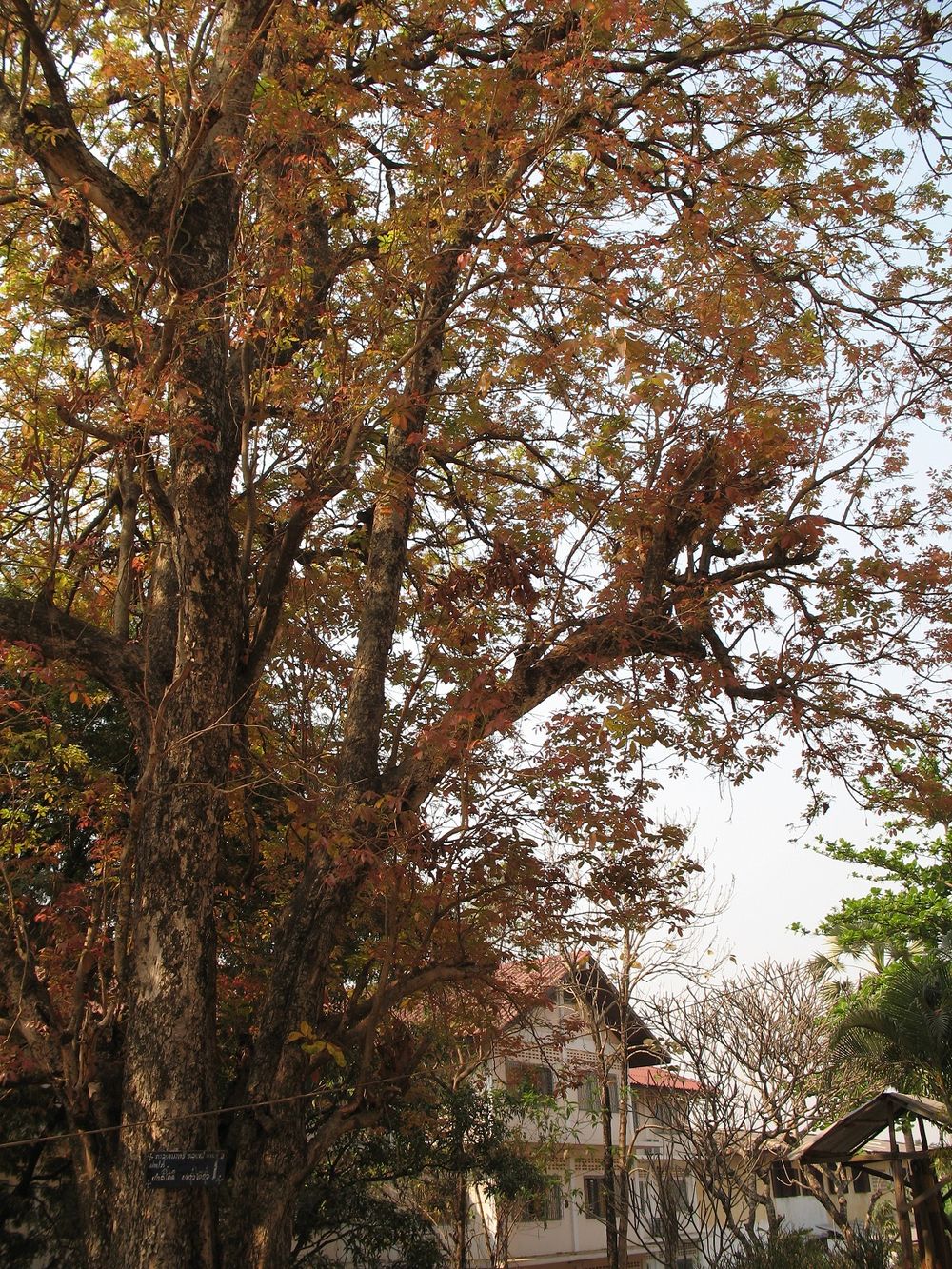
The emerging leaves of this tree of about forty meters are red
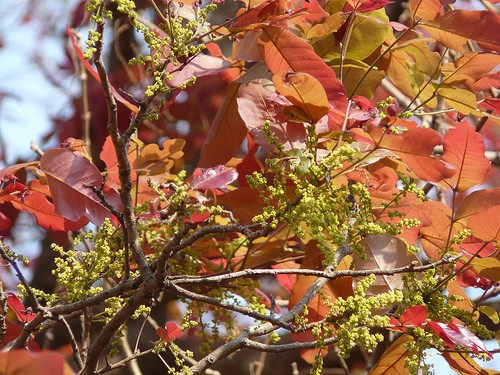
Young red leaves and small flowers
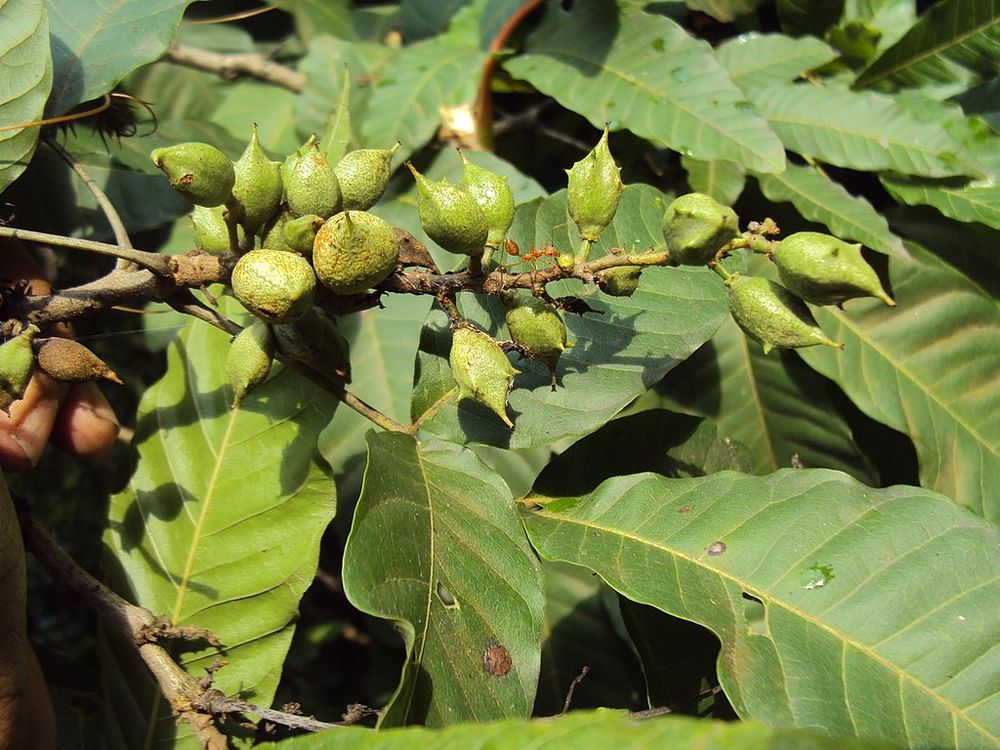
The fruits are not very round!
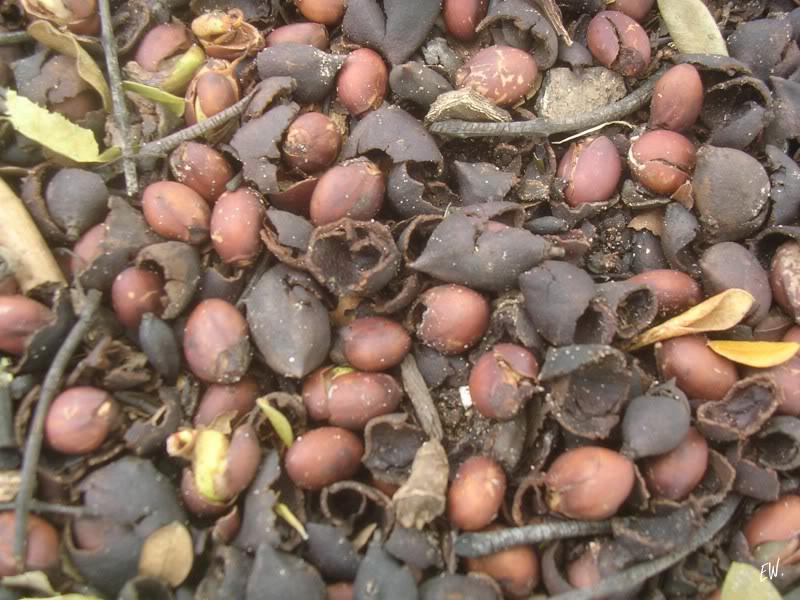
Fallen fruit
Scientific name:
Schleichera oleosa (Lour.) Merr.
Plant family:
Sapindaceae
Common name:
Ceylon Oak
Lao name:
(tone kho som)
I thought I had covered all the small fruits regularly consumed in Laos, but new ones keep emerging, such as mak kho som, several of which shade the Vat Saphangmô in Vientiane.
This tall tree, which can reach up to forty meters, is found in semi-evergreen forests from Sri Lanka and India to the Indochinese peninsula. During the dry season, it sheds its compound leaves consisting of two or four pairs of oblong leaflets, which, when they emerge, are a beautiful dark red, forming a colourful mass that aids in identification. The tiny, pale yellow flowers form fragrant clusters on the bare branches. The nearly round fruit is a small berry, 1 to 2 cm in size, containing one or two hard seeds wrapped in a yellow and sour pulp.
Schleichera oleosa belongs to the Sapindaceae family, known for excellent fruits such as lychees, rambutans, and longans. Its scientific name is a reference to the Swiss botanist J. C. Schleicher. Its English and French names refer to locations: Sri Lanka (formerly Ceylon) for the English name and Cambodia for the French name, with Pongro being the name of a commune in the latter country. In Lao, many fruits are called “kho,” including the highly appreciated blue fruit of a Livistonia palm; however, this one is called “som” meaning “sour” and is botanically unrelated.
At Vat Saphangmô, I was told that the small yellow fruits are very good and even sold in markets. In the southern part of the country, they are considered very sour, and for this reason, they are pickled. They can also be cooked or added to a sour salad (tam som). The acidity is sometimes criticized as it may cause stomach pains, but paradoxically, these same pains are treated with crushed tree bark mixed with red ants; perhaps it’s the ants that are effective? The plant, containing a significant amount of tannins, is used for skin diseases, especially for healing ulcers. The bark, rich in tannins, is sometimes added to betel quid. Additionally, Tone mak kho som is an interesting lacquer carrier; its highly resistant wood is used to make mortars, and it produces excellent charcoal.
As its scientific name suggests, the seeds of Schleichera oleosa are oily; by pressing them, a slightly bitter oil is obtained, which thickens quickly but does not become rancid. In the past, this oil was used in Indochina for both food and lighting. It was also part of the famous hair oil, Macassar oil, highly sought after in Europe for beautiful hair. However, Petelot notes that this cosmetic was very greasy and stained the hats and chairs of high society. These observations illustrate once again how a plant can be rich in multiple uses.
Je croyais avoir fait le tour de tous les petits fruits consommés régulièrement au Laos, mais il s’en découvre toujours de nouveaux comme mak kho som dont plusieurs pieds ombragent le vat Saphangmô à Vientiane.
Ce grand arbre qui peut atteindre quarante mètres se rencontre dans les forêts semi-sempervirentes du Sri-Lanka, de l’Inde, jusque dans la péninsule indochinoise. Il perd en saison sèche ses feuilles composées de deux ou quatre paires de folioles oblongues qui, quand elles naissent, sont d’un beau rouge foncé formant une masse colorée qui permet de l’identifier. Les fleurs minuscules, jaunes pâles, constituent des grappes odorantes sur les branches dénudées. Le fruit à peu près rond est une petite baie de 1 à 2cm contenant une ou deux graines dures enveloppées dans une pulpe jaune et acide.
Schleichera oleosa appartient à la famille des Sapindacées dont nous connaissons de très bons fruits come les Litchi, les Ramboutans et les Longan; son nom scientifique lui a été donné en référence à un botaniste suisse, J. C. Schleicher; ses noms anglais et français font référence à des lieux: le Sri-Lanka (autrefois Ceylan) pour la langue anglaise et le Cambodge pour la française, Pongro étant le nom d’une commune de ce pays. En lao de nombreux fruits se nomment « kho » dont le fruit bleu très apprécié d’un palmier Livistonia, mais celui-là est dit « som », « acide », et n’a rien à voir, botaniquement parlant, avec celui-ci.
Au vat Saphangmô on me dit que les petits fruits jaunes sont très bons et même vendus sur les marchés; ailleurs dans le Sud du pays on considère qu’ils sont très acides et pour cette raison on les met en saumure; on peut également les faire cuire ou les ajouter à une salade acide (tam som). Cette acidité est parfois montrée du doigt car elle peut provoquer des douleurs d’estomac mais, paradoxalement, on soigne ces mêmes douleurs avec l’écorce de l’arbre écrasée avec des fourmis rouges; ce sont peut-être ces dernières qui sont alors efficaces ? La plante qui contient un taux significatif de tanins est employée dans les maladies de peau, en particulier pour la cicatrisation des ulcères. Pour ses tanins également l’écorce est parfois ajoutée à la chique de bétel. Tone mak kho som est, en outre, un porte-laque intéressant; son bois très résistant sert à faire des mortiers et il donne un excellent charbon de bois.
Comme son nom scientifique peut le faire penser, les graines de Schleichera oleosa sont oléagineuses; par pression elles donnent une huile légèrement amère qui s’épaissit rapidement mais sans rancir, autrefois employée en Indochine pour l’alimentation et l’éclairage. Elle entrait dans la composition d’une huile célèbre en son temps, l’huile de Macassar, très recherchée en Europe pour avoir une belle chevelure; Petelot souligne cependant que ce cosmétique était très gras et qu’il tachait les chapeaux et les fauteuils de la bonne société. Ces quelques remarques montrent bien, une fois encore, comment une plante peut être riche en utilisations multiples.
The tree in a pagoda in Laos
The emerging leaves of this tree of about forty meters are red
Young red leaves and small flowers
The fruits are not very round!
Fallen fruit
The tree in a pagoda in Laos
The emerging leaves of this tree of about forty meters are red
Young red leaves and small flowers
The fruits are not very round!
Fallen fruit
Scientific name:
Schleichera oleosa (Lour.) Merr.
Plant family:
Sapindaceae
Common name:
Ceylon Oak
Lao name:
(tone kho som)
I thought I had covered all the small fruits regularly consumed in Laos, but new ones keep emerging, such as mak kho som, several of which shade the Vat Saphangmô in Vientiane.
This tall tree, which can reach up to forty meters, is found in semi-evergreen forests from Sri Lanka and India to the Indochinese peninsula. During the dry season, it sheds its compound leaves consisting of two or four pairs of oblong leaflets, which, when they emerge, are a beautiful dark red, forming a colourful mass that aids in identification. The tiny, pale yellow flowers form fragrant clusters on the bare branches. The nearly round fruit is a small berry, 1 to 2 cm in size, containing one or two hard seeds wrapped in a yellow and sour pulp.
Schleichera oleosa belongs to the Sapindaceae family, known for excellent fruits such as lychees, rambutans, and longans. Its scientific name is a reference to the Swiss botanist J. C. Schleicher. Its English and French names refer to locations: Sri Lanka (formerly Ceylon) for the English name and Cambodia for the French name, with Pongro being the name of a commune in the latter country. In Lao, many fruits are called “kho,” including the highly appreciated blue fruit of a Livistonia palm; however, this one is called “som” meaning “sour” and is botanically unrelated.
At Vat Saphangmô, I was told that the small yellow fruits are very good and even sold in markets. In the southern part of the country, they are considered very sour, and for this reason, they are pickled. They can also be cooked or added to a sour salad (tam som). The acidity is sometimes criticized as it may cause stomach pains, but paradoxically, these same pains are treated with crushed tree bark mixed with red ants; perhaps it’s the ants that are effective? The plant, containing a significant amount of tannins, is used for skin diseases, especially for healing ulcers. The bark, rich in tannins, is sometimes added to betel quid. Additionally, Tone mak kho som is an interesting lacquer carrier; its highly resistant wood is used to make mortars, and it produces excellent charcoal.
As its scientific name suggests, the seeds of Schleichera oleosa are oily; by pressing them, a slightly bitter oil is obtained, which thickens quickly but does not become rancid. In the past, this oil was used in Indochina for both food and lighting. It was also part of the famous hair oil, Macassar oil, highly sought after in Europe for beautiful hair. However, Petelot notes that this cosmetic was very greasy and stained the hats and chairs of high society. These observations illustrate once again how a plant can be rich in multiple uses.
Je croyais avoir fait le tour de tous les petits fruits consommés régulièrement au Laos, mais il s’en découvre toujours de nouveaux comme mak kho som dont plusieurs pieds ombragent le vat Saphangmô à Vientiane.
Ce grand arbre qui peut atteindre quarante mètres se rencontre dans les forêts semi-sempervirentes du Sri-Lanka, de l’Inde, jusque dans la péninsule indochinoise. Il perd en saison sèche ses feuilles composées de deux ou quatre paires de folioles oblongues qui, quand elles naissent, sont d’un beau rouge foncé formant une masse colorée qui permet de l’identifier. Les fleurs minuscules, jaunes pâles, constituent des grappes odorantes sur les branches dénudées. Le fruit à peu près rond est une petite baie de 1 à 2cm contenant une ou deux graines dures enveloppées dans une pulpe jaune et acide.
Schleichera oleosa appartient à la famille des Sapindacées dont nous connaissons de très bons fruits come les Litchi, les Ramboutans et les Longan; son nom scientifique lui a été donné en référence à un botaniste suisse, J. C. Schleicher; ses noms anglais et français font référence à des lieux: le Sri-Lanka (autrefois Ceylan) pour la langue anglaise et le Cambodge pour la française, Pongro étant le nom d’une commune de ce pays. En lao de nombreux fruits se nomment « kho » dont le fruit bleu très apprécié d’un palmier Livistonia, mais celui-là est dit « som », « acide », et n’a rien à voir, botaniquement parlant, avec celui-ci.
Au vat Saphangmô on me dit que les petits fruits jaunes sont très bons et même vendus sur les marchés; ailleurs dans le Sud du pays on considère qu’ils sont très acides et pour cette raison on les met en saumure; on peut également les faire cuire ou les ajouter à une salade acide (tam som). Cette acidité est parfois montrée du doigt car elle peut provoquer des douleurs d’estomac mais, paradoxalement, on soigne ces mêmes douleurs avec l’écorce de l’arbre écrasée avec des fourmis rouges; ce sont peut-être ces dernières qui sont alors efficaces ? La plante qui contient un taux significatif de tanins est employée dans les maladies de peau, en particulier pour la cicatrisation des ulcères. Pour ses tanins également l’écorce est parfois ajoutée à la chique de bétel. Tone mak kho som est, en outre, un porte-laque intéressant; son bois très résistant sert à faire des mortiers et il donne un excellent charbon de bois.
Comme son nom scientifique peut le faire penser, les graines de Schleichera oleosa sont oléagineuses; par pression elles donnent une huile légèrement amère qui s’épaissit rapidement mais sans rancir, autrefois employée en Indochine pour l’alimentation et l’éclairage. Elle entrait dans la composition d’une huile célèbre en son temps, l’huile de Macassar, très recherchée en Europe pour avoir une belle chevelure; Petelot souligne cependant que ce cosmétique était très gras et qu’il tachait les chapeaux et les fauteuils de la bonne société. Ces quelques remarques montrent bien, une fois encore, comment une plante peut être riche en utilisations multiples.